
Published with AUVSI in 2025
By Alicia Gavin
Director of Communications and Marketing, RoboNation
The United States faces a workforce crisis—one that threatens national security, economic stability, and innovation in critical industries. While technology advances at an unprecedented rate, the pipeline of skilled workers needed to support and expand these innovations is failing to keep pace. Nearly 17 million infrastructure workers are projected to permanently leave their jobs over the next decade due to retirements, job transfers, and other labor market shifts, according to Brookings research.1
The Final Report of the Congressional Commission on the Strategic Posture of the United States underscores the urgency of addressing this issue, warning that years of neglect and an increasingly complex threat environment have left the country’s strategic capabilities in dire need of an overhaul. The commission equates this challenge to the U.S. moonshot of the 1960s—requiring an all-hands, government-wide effort to rebuild the nation’s technical workforce.2
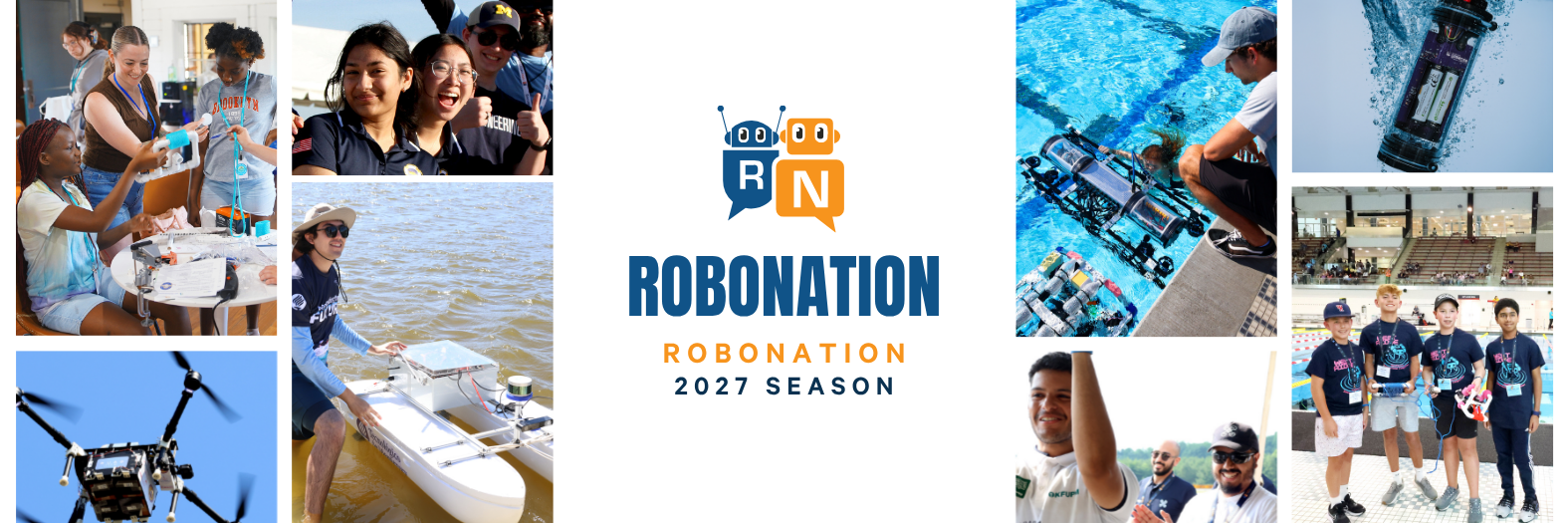
RoboNation is answering that call with a hands-on, immersive approach to workforce development. Through a strategic combination of instructional kits, competitions, educational resources, and industry partnerships, RoboNation is not just preparing students for the future—it’s actively shaping the workforce that will sustain and expand the industries driving our national security and economic strength.
Who We Are: A Force for Experiential Learning
RoboNation is a 501(c)(3) nonprofit organization on a mission to provide hands-on robotics education, empowering students to tackle global challenges. With a portfolio of nine educational programs spanning K-12 through university levels, RoboNation is engaging and cultivating the next generation of engineers, manufacturers, fabricators, programmers, and more. RoboNation equips students with the tools and opportunities they need to become part of a highly skilled, future-ready workforce.
From classroom to coastline, gymnasium and pool to garage, RoboNation’s programs reach over 250,000 students annually worldwide—many of whom build lifelong networks, find mentorship, discover purpose and passion, and secure employment through RoboNation participation. RoboNation serves as a proving ground for young talent and a beacon for industry partners who recognize the value of hands-on experience in developing tomorrow’s workforce.
Beyond the Classroom: A Workforce Pipeline That Works
Workforce development cannot begin at the hiring stage. By then, it’s too late. To truly cultivate the next generation, students must be introduced to real-world problem-solving early—and often. RoboNation’s programs build this foundation from the ground up, offering a clear, structured pathway from K-12 to industry careers.
Introduction to STEM
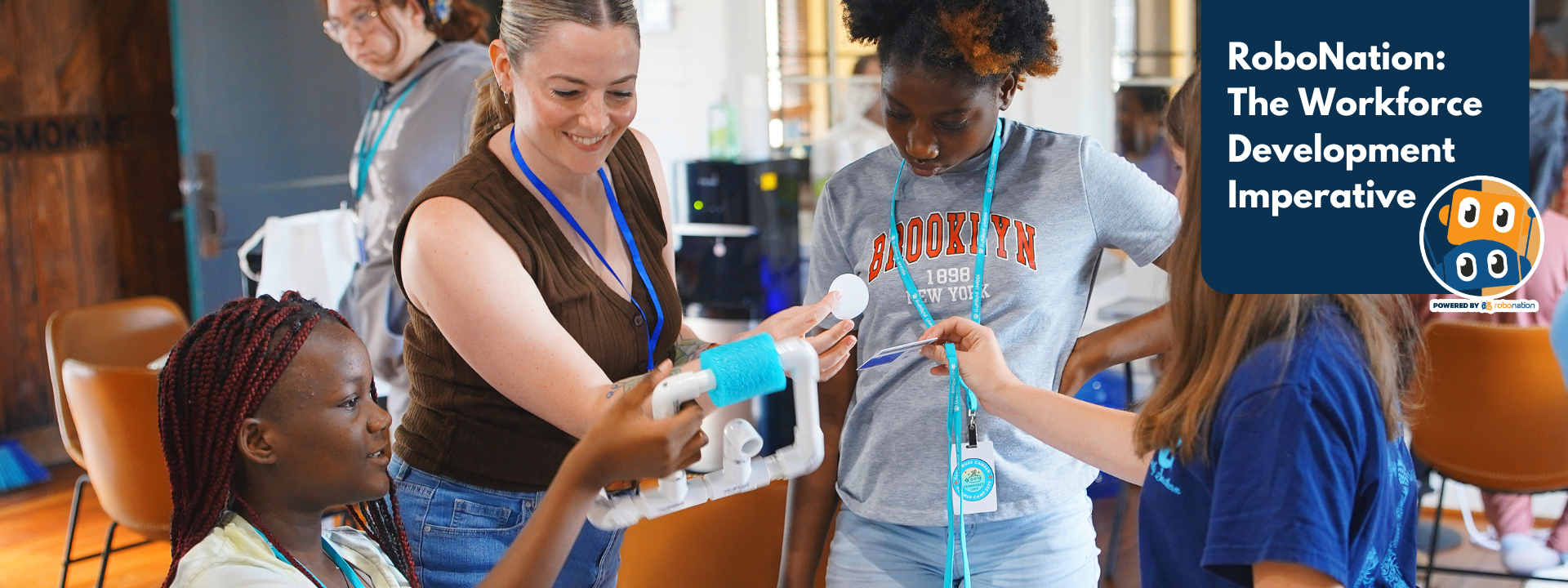
- SeaPerch introduces middle and high school students to robotics through the hands-on construction and piloting of underwater remotely operated vehicles (ROVs). Designed to be low-cost and highly adaptable, the program fosters early interest in engineering and skilled trades while building teamwork and problem-solving skills in classrooms, after-school programs, and community centers.
- GoSense is a new, versatile, low-cost environmental sensing kit that supports air, land, and sea applications. Tailored for educators, students, tradesmen, and hobbyists, GoSense teaches data collection, environmental monitoring, and inquiry-based STEM education through two unique kits: GoSense Air+ and GoSense Marine.
Advancing to Autonomy
- RoboBoat requires international university and top high school students to design, build, and test self-driving robotic boats, known as Autonomous Surface Vehicles (ASVs). These ASVs complete tasks such as obstacle avoidance and precision navigation, mirroring complex dilemmas faced by the global maritime industry.
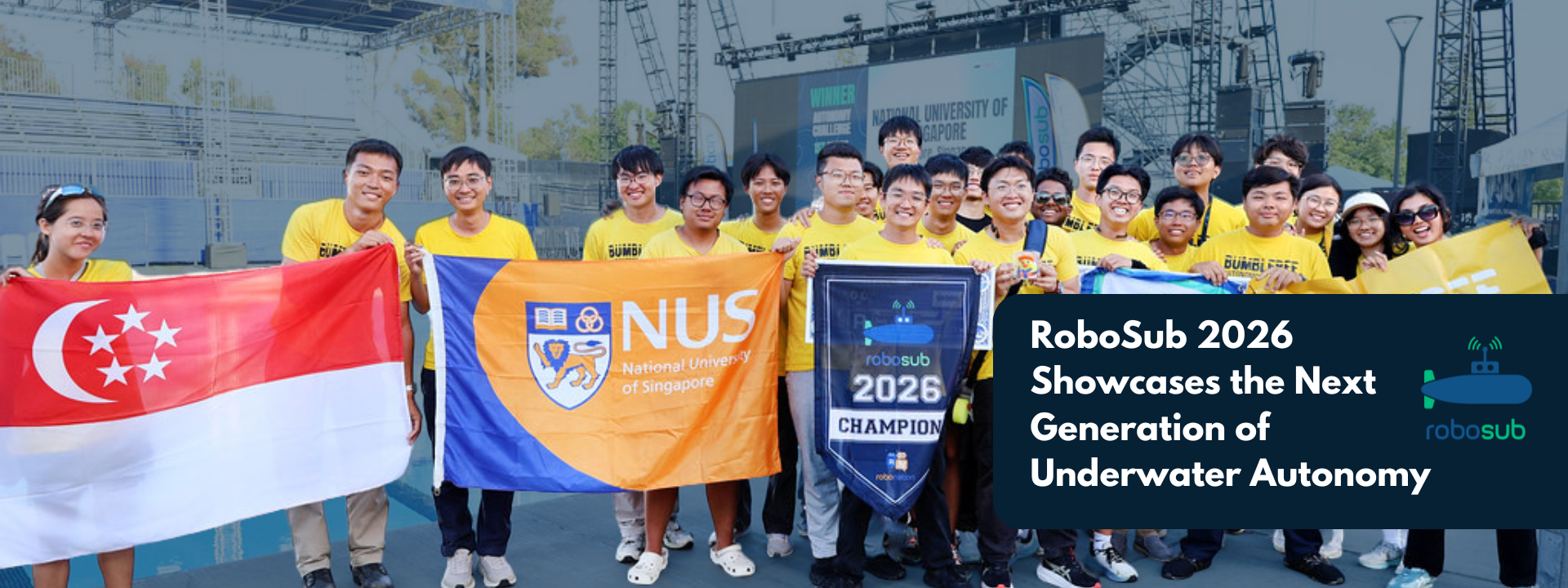
- RoboSub brings together university and advanced high school teams from around the world to design and build robotic submarines—Autonomous Underwater Vehicles (AUVs)—that perform complex tasks modeled after systems used in underwater exploration, seafloor mapping, reconnaissance, and sonar localization.
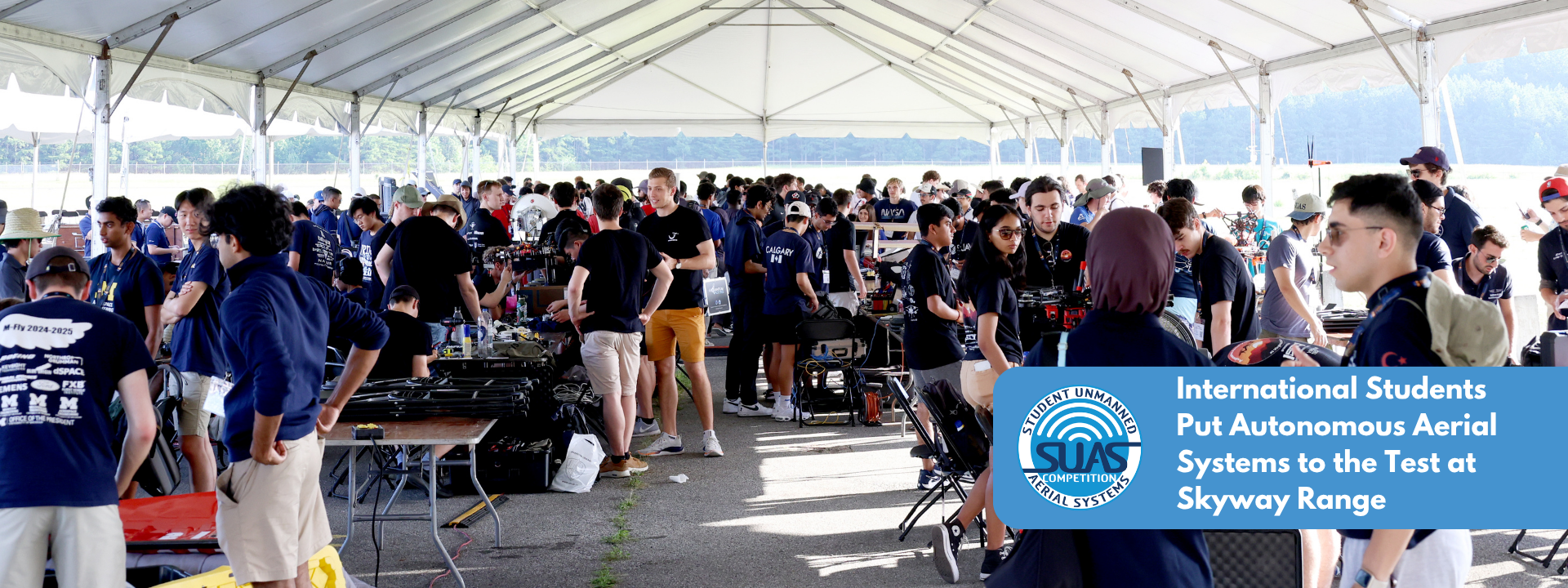
- SUAS (Student Unmanned Aerial Systems) is an aerial robotics competition where students design, integrate, report on, and demonstrate a UAS capable of autonomous flight, remote sensing with onboard payloads, and execution of mission-specific tasks.
Mastering Collaborative Autonomy
- RobotX is RoboNation’s most advanced and multidisciplinary program, combining autonomy across both aerial and maritime domains. It includes three key components:
- The Maritime RobotX Challenge, a hands-on competition simulating industry-relevant scenarios in maritime defense, logistics, and autonomous coordination. Each team uses a standardized Autonomous Maritime System (AMS)—a 16-foot-long surface vehicle—outfitted with custom hardware and software to complete the course. Teams also integrate their AMS with custom aerial systems (2022, 2024) or underwater systems (2016, 2018), demonstrating essential skills and technical prowess in collaborative autonomy across domains. The competition demands long-term technical planning, innovation, and strong interdisciplinary collaboration.
- Virtual RobotX (VRX), a simulation-based competition that enables teams to test and compete using the RobotX platform in a virtual environment—is reducing financial barriers and fostering software and programming skills.
- The RobotX Forum is a biennial event that brings together students, researchers, industry leaders, and senior officials to explore the future of autonomous maritime technology.
RoboNation also manages SeaGlide and supports the Intelligent Ground Vehicle Competition (IGVC) and the International Aerial Robotics Competition (IARC) to expand access to robotics education further across maritime, land, and air domains.
Both SeaPerch and GoSense feature comprehensive educational curricula designed to support meaningful STEM learning across a variety of instructional environments. The curriculum is classroom-ready and aligned with national education standards, including the Common Core State Standards (CCSS) for Math and English Language Arts, the Next Generation Science Standards (NGSS), and the Partnership for 21st Century Learning (P21) Framework. A robust library of instructional resources—including lesson plans, technical guides, inquiry-based extensions, and assessment tools—ensures flexible implementation in both formal and informal settings.
The variety and adaptability of RoboNation’s STEM focused and autonomous programs allow for a highly scalable and far-reaching approach to workforce development. As Aristotle noted in The Nicomachean Ethics, “For the things we have to learn before we can do them, we learn by doing them.” RoboNation embodies this principle, ensuring that students do not just graduate with theoretical knowledge but with the qualification and confidence to enter the workforce ready to contribute on day one.
The Industry Connection: Partnerships That Matter
Preparing a workforce for the demands of national defense and emerging technologies means aligning education with real-world needs. RoboNation works with strategic partners like General Dynamics Electric Boat and Blue Forge Alliance to do just that.
General Dynamics Electric Boat—an essential player in the Maritime Industrial Base—knows firsthand the importance of developing skilled workers for high-stakes environments. By partnering with RoboNation and its program SeaPerch program, General Dynamics Electric Boat facilitates students gaining meaningful exposure to the core trades and advanced manufacturing, illuminating often-overlooked fields and challenging conventional career paths.
Developing targeted curricula that align with core trade needs and underfilled STEM careers—especially when built in partnership with industry—is a game changer for workforce development. When paired with programs like SeaPerch and GoSense, content-rich curricula and educational tools do more than teach skills; they actively introduce students to essential in-demand occupations. Studies continue to show that students who receive practical career focused teaching and CTE credits have lower unemployment rates following high school graduation.3
The Institute for Defense Analysis highlights a trio of critical workforce issues: hiring and onboarding, attrition, and knowledge transfer.2 RoboNation’s approach—especially through early intervention in the K-12 space—widens the applicant pool and strengthens interest from a young age. By linking students with today’s workforce through mentorship and practical learning tools, RoboNation supports a steady pipeline of talent built on continuity, curiosity, and capability.
Global Impact: International Collaboration
Workforce development isn’t confined by borders—it is a global imperative. For example, the AUKUS partnership between Australia, the United Kingdom, and the United States reflects this strategic urgency, with a major focus on conventional and autonomous maritime systems to promote a free and open Indo-Pacific Region. As these nations work together to modernize defense manufacturing and emerging technologies, organizations working in parallel with such government initiatives, like RoboNation, offer a critical bridge between education and global industry needs.
The Maritime RobotX Challenge, a flagship event of RoboNation, exemplifies this commitment. Hosted in worldwide venues such as the United States, Australia, and Singapore, the competition attracts the top global talent with missional critical skills that industry leaders such as Thales, BAE Systems, and Huntington and Ingalls will need to hire to meet Pillar I and Pillar II goals.
RoboNation’s full portfolio of programs include participants from over 60 nations including, but not limited to Australia, the United Kingdom, Japan, Canada, New Zealand, and South Korea.
This global approach aligns with broader workforce trends. The World Economic Forum’s “Future of Jobs Report 2025” highlights that 39% of core skills are expected to change by 2030, emphasizing the need for continuous, cross-border skill development.4Additionally, the International Labour Organization reports a global labor force participation rate of 60.8%, reflecting the vast potential for initiatives that harness and enhance human capital worldwide.5
Through platforms like RoboNation, students transcend traditional educational boundaries. They engage in international collaborations, enriching their technical prowess while fostering cultural understanding. Such perspectives are invaluable in preparing a workforce capable of addressing global concerns, ensuring that technical advancement and modernization are not siloed efforts but collective responsibilities.
The Hands-On Advantage: More Than a Degree
What sets RoboNation’s alumni apart is not just what they know—but what they have done. Autonomous and uncrewed systems demand more than classroom learning; they require problem-solving, adaptability, and technical precision in operational environments. RoboNation programs simulate this reality, offering students the chance to test their skills under pressure, troubleshoot failures in the field, and iterate designs based on real-time data.
Employers across aerospace, maritime technology, and national security have taken notice. RoboNation alumni have gone on to work for the U.S. Navy, SpaceX, Boeing, leading industry contractors, and commercial companies—not simply because of their degrees, but because they have already spent years applying their knowledge in autonomous systems development and deployment.
This aligns with findings from the National Academy of Engineering, which notes that U.S. higher education must not only prepare engineers to adapt to a changing world but also equip them with the skills to drive it forward.6 By emphasizing open-ended problem-solving and practical experience, RoboNation is ensuring that its students are not just workforce-ready—they are workforce leaders.
The RoboNation Community: Expertise, Dedication, and Influence
At the heart of RoboNation’s success is a passionate community composed of students, industry experts, educators, and volunteers who make every program possible. RoboNation’s judges, technical advisors, and staff are drawn from a wide range of industries, government agencies, and academic institutions. These individuals are leaders in their fields—engineers, researchers, military professionals, and educators—who volunteer their time and specialization to support the next generation. They mentor, engage, and guide students, helping to bridge the gap between the classroom and real-world application.
Across all nine programs, it is the community of advisors and educators that fuel sustained impact. These dedicated individuals help implement RoboNation programs in schools and universities, maintain team continuity across years, and serve as catalysts for institutional and regional STEM growth. By not only training and empowering students, but educators as well, RoboNation is seeding long-term, grassroots change in how STEM is taught and experienced.
Together, this community creates an ecosystem where inspiration meets instruction, and where students are not only taught—they are transformed.
A Call to Action: Investing in the Workforce We Need
The future of autonomous technology, national security, and economic resilience hinges on one critical factor: talent. We cannot afford to wait until students enter the job market to prepare them for the demands of the workforce. The time to invest in workforce development is now.
RoboNation is proving that a structured, hands-on approach works. Through its educational initiatives, competitions, products, educator trainings, and industry and government partnerships, RoboNation is building a pipeline of skilled professionals who are not just ready for the future—they are defining it.
Sectoral partnerships, as highlighted by the Economic Development Administration, are a proven strategy for strengthening workforce systems by bringing together industry, education, and policy leaders to align training programs with market needs. RoboNation embodies this approach, ensuring that students gain the technical and practical skills required to sustain the industries that keep our nation competitive.7
For policymakers, industry leaders, and educators, the path forward is clear: invest in programs that equip students with tangible learning opportunities, bridge the gap between education and employment, and create a workforce capable of sustaining the industries vital to national security and economic stability.
The workforce deficit is not an abstract problem—it is an urgent reality. And RoboNation is showing exactly how we can meet it.
Citations:
1 Muro, Mark. “The Incredible Shrinking Infrastructure Workforce — and What to Do About It.” Brookings Institution, Feb. 14, 2024. https://www.brookings.edu/articles/the-incredible-shrinking-infrastructure-workforce-and-what-to-do-about-it/
2 Congressional Commission on the Strategic Posture of the United States. “America’s Strategic Posture: The Final Report.” Institute for Defense Analyses, October 2023. https://www.ida.org/-/media/feature/publications/a/am/americas-strategic-posture/strategic-posture-commission-report.ashx
3 National Center for Education Statistics. “Career and Technical Education Programs in Public School Districts: 2016–17.” U.S. Department of Education, March 2020. https://nces.ed.gov/pubs2020/2020060/
4 World Economic Forum. “The Future of Jobs Report 2025.” April 2024. https://www.weforum.org/publications/the-future-of-jobs-report-2025/digest/
5 International Labour Organization. “ILOSTAT Database.” Accessed March 23, 2025. https://ilostat.ilo.org/data/
6 National Academy of Engineering. “Higher Education in Engineering: Hands-on Experience and Teaching Factory.” Accessed March 23, 2025. https://www.nae.edu/221205/Higher-Education-in-Engineering-Handson-Experience-and-Teaching-Factory
7 U.S. Economic Development Administration. “Workforce Development.” Accessed March 23, 2025. https://www.eda.gov/resources/comprehensive-economic-development-strategy/content/workforce-development